
For decades, treatment of colorectal cancer followed one standard pathway: surgery, radiotherapy and chemotherapy. Today, it is clear that colorectal cancer is not a single disease. It is a group of genetically distinct tumors that require an individualized approach.
Precision medicine allows treatment to be selected not only according to stage, but also according to the molecular profile of the tumor.
Why “One Treatment for Everyone” No Longer Works
Two patients with the same diagnosis—for example, “stage III colon cancer”—may require entirely different treatment strategies. The difference is often hidden at the level of DNA. For this reason, in modern oncology, treatment planning begins with molecular diagnostics.
MSI / MMR — The First and Most Important Test
Cells have a DNA “error-correction” system known as mismatch repair (MMR). If this system does not function properly, the tumor accumulates mutations. In such cases, tumors often respond well to immunotherapy, which may help patients avoid the severe side effects of traditional chemotherapy.
RAS Genes and Prediction of Treatment Ineffectiveness
In approximately half of colorectal cancers, the KRAS or NRAS genes are mutated. This means that certain targeted therapies simply will not work. Knowing this in advance helps avoid ineffective and toxic treatment.
BRAF Mutation — When a Special Strategy Is Needed
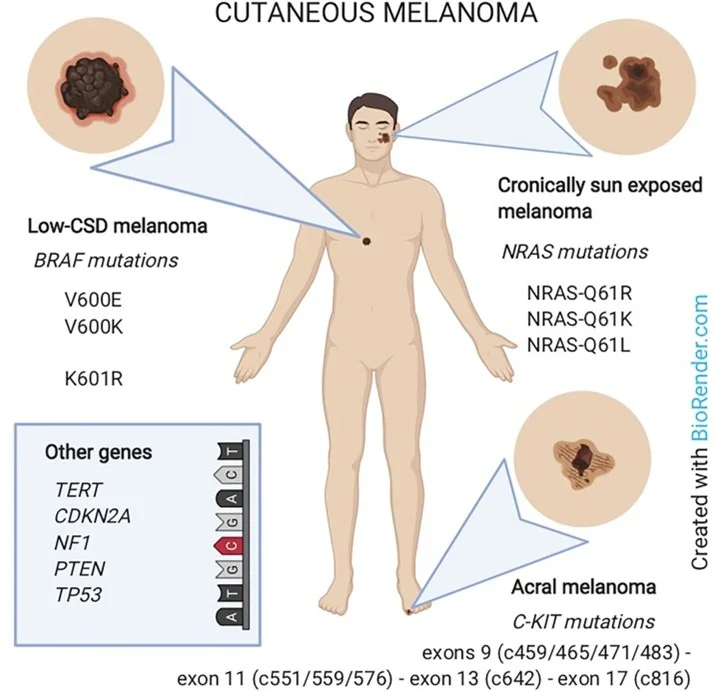
BRAF mutation is often associated with more aggressive disease. However, there are now special targeted combinations that block this signaling pathway. This is a clear example of how molecular diagnostics can change prognosis and treatment planning.
| Biomarker | Why It Matters |
|---|---|
| MSI/MMR | Helps determine the likelihood of benefit from immunotherapy |
| KRAS/NRAS | Shows whether anti-EGFR therapy is likely to be effective |
| BRAF | Reveals the potential role of targeted therapy |
What Molecular Diagnostics Gives Us Today
Molecular diagnostics makes it possible to choose treatment that is more effective, less toxic and maximally individualized.
This is no longer the future. It is the reality of modern oncology.